Talk to us.
One situation your team wants handled better is enough to start. Here is what the conversation looks like, from the first call to the day the build ships.
Try a demo before you talk to us: practise a conversation with an AI, or talk to Simon's twin.
Talk with Simon's Twin about PTR.
Ask about VR training, AI roleplay or a twin for your business.
Getting in touch is the easy part
No supplier panel, no specification, no quarter of lead time. The message goes to a person and it comes back from one, usually with a question about the situation rather than a menu of products.
What that first exchange is trying to settle is straightforward: whether the thing you want practised is worth building at all.
What to bring
Tell us who has the conversation, where it happens and what goes wrong when it is unrehearsed. That is the whole first brief.
If you have a program already, bring it. Mater Education brought an existing culture program; Google brought real incidents from its own workplace. Both were built on, not replaced.
The first call
A video call that ends with a yes, a no, or a question we need answered before anything is built.
A yes, a no, or a question
We ask whether practising this in real life is dangerous, impossible, counterproductive or expensive. If it is none of those, we say so and stop there, including when that means telling you not to buy VR, AR or AI from us.
If it is, you leave the call knowing which technology fits, roughly how long the work takes, and who needs to be in the first workshop.
Five stages, from the first workshop to the years after launch
The same five stages run every PTR project. Each has a room it happens in and a thing you hold at the end of it.
Stage one, weeks one to four
Discovery and consultation
We start with your goals, the people who will use the build and the technology that fits them.
You hold: a clear answer on whether XR or AI earns its place, and a scope for the workshops.
Stage two, weekly with your team
Co-design workshops
Your practitioners shape the scenarios in their own language: an alignment session, a concept, scripts, storyboards and agreed constraints. Lived experience sits at the table as an equal.
You hold: signed-off scripts and storyboards that your own people wrote.
Stage three, months two to six
Prototyping and development
Environments, characters and features are built and rebuilt: draft builds, two to three feedback rounds and short fortnightly check-ins so nothing drifts from the brief.
You hold: a draft build in your hands at the end of each round.
Stage four, before launch
Testing and deployment
The build goes to the people it is for, on the platforms they use, with the accessibility check done first. Then it ships with analytics and support built in.
You hold: a build your own people have used, and the record of what they said.
Stage five, after launch
Ongoing support
Guides and workbooks, a high-level review, and a team that stays with the experience as it changes, with clear approval and content-oversight accountability rather than a one-off sign-off.
You hold: a program your own facilitators run, the way Mater Education runs its own.
"Our ethos from the beginning has been about co-designing solutions alongside people with lived experiences."
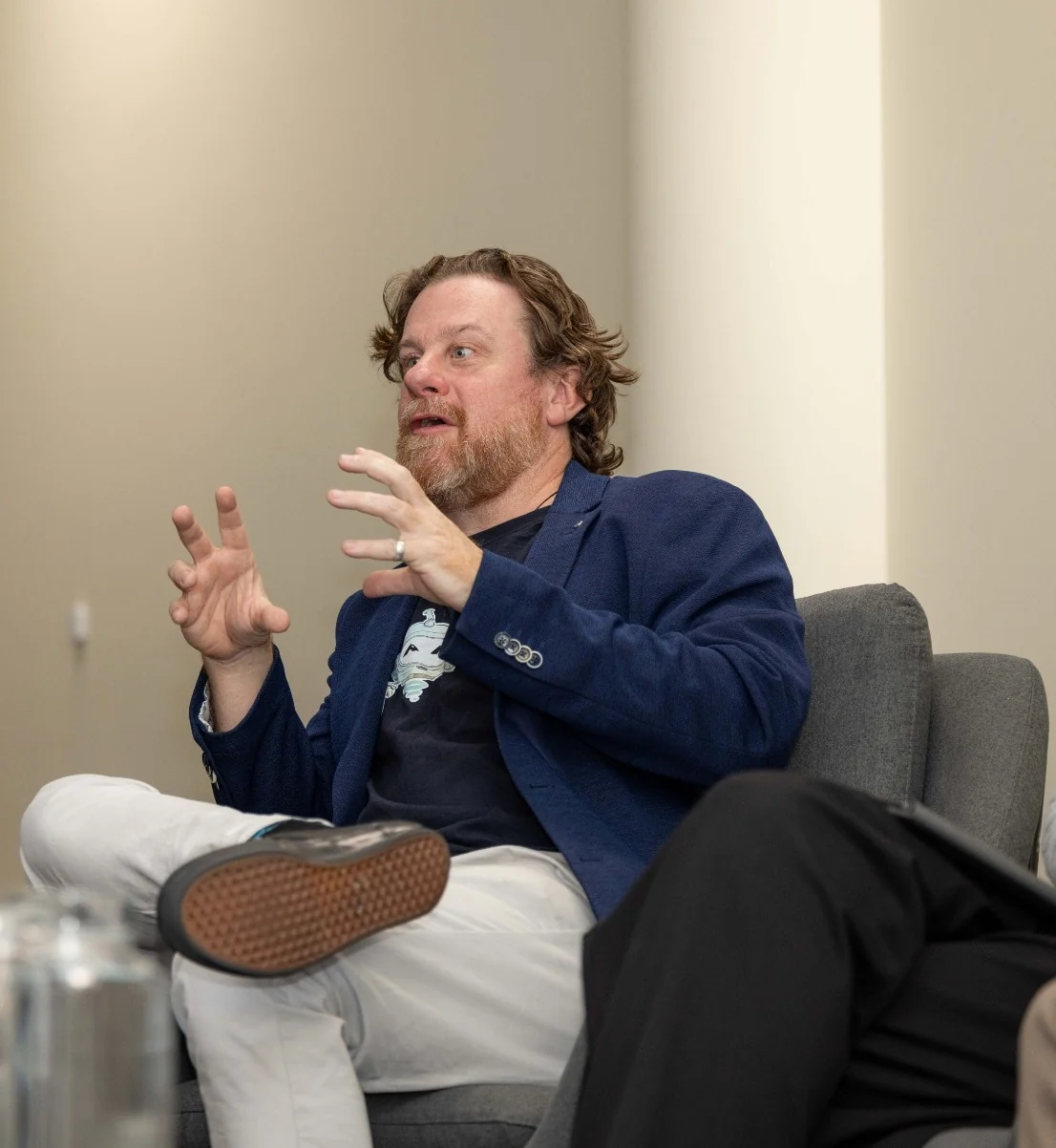
Co-founder and joint CEO, People Tech Revolution. SAE Insights
What you leave with
Not a deck, not a proposal, not a quote for a quarter of work: a working build your own people have already used, and a clear answer on whether to go further.
And a build that changes with you
The first version is a starting point, not the final word. It keeps changing while your people use it.
Decisions get made on the build, not on a slide about it
For a Fast Build, two weeks in you have something to open on a phone or put in front of a customer.
For a custom program, every feedback round ends with a draft your practitioners have tried, and the next workshop starts from what they said.
It ends in a conversation
Every route through this page arrives at the same place: two people, one situation, and an honest answer about what can be done with it.
Two chairs, both taken
The first call, the co-design workshop and every review round are the same shape: someone who lives the situation, someone who builds the rehearsal for it, and an hour spent agreeing what actually happens in the room.
Nothing on this page replaces that hour. The rest of it is how the hour gets arranged.
If the question will not wait
Arranging a first call takes a week. A question does not always give you a week.
Ask now, book the call for later
Simon's twin answers from material PTR has approved, at whatever hour you are reading this, and books time with a person when the answer needs one.
Where to go next
The approach in full, the three things PTR builds, and the work clients have already run.
And more places to look
What a Fast Build ships in two weeks, the case studies clients have already run, and Didymo, PTR's own digital twin product.